
NLE November 2025: Record-Breaking National Passing Rate


The Professional Regulation Commission released the long-awaited results of the second-semester PNLE last November 27, and the outcome was unprecedented. This year’s November cycle achieved a 90.04% national passing rate, the highest recorded in nearly three decades. Of the 45,192 examinees who took the exam last November 4 and 5, 40,692 successfully passed, marking a 5.05% significant jump from last year’s performance.
Highest Passing Rate Since 1996
Appendix 1: PNLE Passing Rate 1996–2025

The data above highlights the NLE passing rates since 1996. This year’s second-semester exceptional result is a standout moment for the nursing community. Not only does it surpass last year’s second-semester outcome, but it also outperforms many exam cycles in the past decade. This cycle’s large volume of takers is a major contributor to this record-breaking rate, with over four times as many examinees as in the May session, reinforcing the long-observed pattern of higher turnout and stronger performance during the November cycle.
Number of NLE Takers
Appendix 2: Number of Takers Since 2021

Over the last five years, since the pandemic, the number of PNLE takers has increased each year, with the second semester consistently drawing the largest pool. The increase could be attributed to various factors, including the trend that November exams attract a larger number of graduates, particularly those who need extra time for preparation after the academic year. Additionally, there is a backlog of graduates from 2020 and early 2021, resulting from the postponement of board exams due to the COVID-19 pandemic. In addition, the Commission on Higher Education (CHED) reported a general increase in enrollment in nursing programs in recent years, driven by strong local and international demand for nurses, resulting in a larger cohort of eligible graduates ready to take the board exam.
Appendix 3: 2021 – 2025 Full Semesters total number of Takers and Passers
| 2021 | 2022 | 2023 | 2024 | 2025 |
TAKERS | 19,574 | 34,362 | 46,567 | 45,650 | 55,962 |
PASSERS | 11,094 | 25,145 | 36,525 | 37,098 | 47,627 |
From 2021 to 2025, the data shows a consistent increase in the number of passers, a positive signal for the nursing profession. These improvements coincide with several developments and interventions rolled out by government agencies and partner institutions. Below are some of the significant shifts shaping the nursing landscape this year:
Expansion of Nursing Schools and Training Capacity
Since CHED lifted its moratorium on new BS Nursing programs in 2022, the number of higher education institutions offering nursing has grown steadily. As of late 2024, nursing programs increased from 354 to 408, with more schools set to open in the coming academic years. CHED has also allowed DOH Level-2 hospitals to serve as base hospitals, significantly expanding clinical training capacity nationwide.
These developments are expected to produce around 2,052 additional nursing graduates by AY 2027–2028, supporting the growing pipeline of future PNLE examinees.
Strong Policy Push to Strengthen the Nursing Workforce
This year, the government amplified its efforts to address the country’s nursing shortage. President Marcos directed CHED to reinforce the supply of nurses and ensure that the Philippine workforce can meet both domestic and international demand. With this, the Commission proposed an intervention program in various phases to solve the shortage.
Among the interventions is the Free Nursing Review Program for Clinical Care Associates and under-board nurses, a P25-million initiative designed to help graduates pass the licensure exam. This program is delivered in partnership with top nursing schools across the country and runs through three exam cycles. The Commission is also prioritizing underserved regions when evaluating new nursing program applications to ensure a more balanced distribution of training institutions.
Global Nursing Demand Continues to Rise
Despite global workforce gains in recent years, the WHO’s State of the World’s Nursing update (2025) indicates that many countries continue to face nursing shortages. High-income countries still heavily rely on foreign-trained nurses, and the Philippines remains one of the largest sources.
This steady demand for foreign-trained nurses pushes Philippine schools to enhance training quality and motivates students to prepare more seriously for licensure exams.
Appendix 4: Raw Data of NLE Passers and Takers from 1996 - 2025 (per semester)
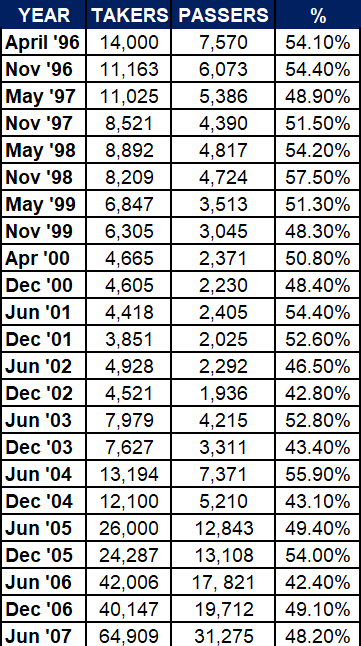


The November 2025 PNLE results mark a significant moment for the nursing profession in the Philippines. The record-breaking passing rate, combined with the steady rise in takers over the past five years, shows that the country is gradually rebuilding and expanding its nursing workforce after the challenges brought by the pandemic.
These gains, however, come with responsibilities. Continued collaboration between relevant government bodies and nursing schools will be essential to maintain the quality of education, support aspiring nurses, and prepare the workforce for both local and international demands. As the healthcare landscape evolves, the strength of the nursing profession will continue to depend not only on how many graduates pass the exam, but also on how well the system supports their long-term growth and retention.
The 2025 data reflect a positive trajectory, and if these efforts remain consistent, the coming years may bring even more promising outcomes for the nursing community.


xoso66 com dạo này thấy bạn bè nhắc nhiều quá nên mình cũng ghé thử cho biết, chủ yếu xem giao diện thôi chứ không tìm hiểu gì sâu. Cảm giác đầu tiên là trang làm khá “dễ nhìn”, kiểu mở ra là thấy ngay chỗ xem lịch quay với phần tra kết quả, không phải bấm qua lại mấy lớp mới ra. Mình hay coi nhanh theo ngày nên thích cách họ chia theo từng khu vực, nhìn phát biết miền nào đang cần xem, đỡ bị loạn thông tin. Lướt trên điện thoại cũng ổn, chữ không bé quá và các khung nội dung không bị dồn chật. Nói chung ai chỉ cần theo dõi cho gọn thì…
hitclub mình vào thử cho biết vì thấy bạn bè nhắc hoài, chứ cũng không định đăng nhập hay gì. Vừa mở ra là thấy họ để ngay đoạn nhắc kiểm tra đúng link trước khi nhập thông tin, nhìn khá “có tâm” nên mình cũng đỡ lo kiểu lạc vào trang linh tinh. Mình chỉ lướt nhẹ mấy phần hướng dẫn cơ bản thôi, cách trình bày đơn giản, chữ dễ đọc, không bị rối mắt. Giao diện tổng thể nhìn đồng bộ, mấy nút đăng ký đăng nhập đặt ngay chỗ dễ thấy nên không phải mò. Trên đầu trang còn có dòng hiển thị thời điểm kiểm tra link, nhìn phát là biết họ vừa cập nhật…
https://good88.be/ dạo này thấy nhiều người nhắc nên mình cũng bấm vào nghía thử cho biết, kiểu xem giao diện với cách họ trình bày thông tin thôi. Vào trang cái thấy bố cục khá sáng sủa, chia nội dung theo từng khối nên kéo xuống là nắm được ý chính, không bị chữ dồn dập nhìn mệt mắt. Mình có lướt qua phần giới thiệu thấy họ nói hoạt động từ khoảng 2015, đọc cho vui chứ cũng không đào sâu. Thử mở trên điện thoại rồi chuyển qua vài mục thì load ổn, bấm qua lại không bị khựng nhiều. Mấy tiêu đề với hộp thông tin đặt rõ ràng, menu nằm chỗ dễ thấy nên lướt nhanh…
https://keonhacai.camp/ mình ghé thử lúc đang rảnh, kiểu nghe người quen nhắc nên vào xem cho biết. Ấn tượng đầu là trang load khá nhẹ, mở lên là thấy bảng kèo hiện ra rõ ràng, không bị nhồi chữ hay màu mè quá. Mình hay xem trên điện thoại nên thích kiểu họ trình bày theo khối, kéo xuống là thông tin tự chia cột gọn gàng, nhìn phát nắm được tỷ lệ và mấy thay đổi cơ bản luôn. Không phải bấm qua nhiều trang con, mấy mục chính nằm ngay chỗ dễ thấy nên tìm kèo hôm nay nhanh. Nói chung giao diện làm theo kiểu ưu tiên bảng tỷ lệ, nhìn sạch và dễ đọc, phần kèo…
lv88 hôm bữa mình lướt thấy người ta nhắc nên ghé vào coi thử cho biết thôi. Mình không có đọc kỹ từng bài, chủ yếu xem giao diện với cách họ trình bày có dễ nhìn không. Vào trang cái thấy bố cục khá sạch, chữ với khoảng trắng nhìn đỡ mỏi mắt, kéo xuống cũng ổn chứ không bị giật lag. Mình thích kiểu họ để mấy phần rõ ràng nên không phải đoán xem đang ở mục nào. Có đoạn giới thiệu kiểu “nơi niềm tin tạo dựng thương hiệu” nhìn cũng gọn, không dài dòng. Với lại phần tiêu đề “TIN TỨC” được tách ra nổi bật nên lướt phát là nhận ra ngay.